Introduction: Chiang Mai's Sacred Mountain Jewel
Perched high on the forested slopes of Doi Suthep-Pui National Park, approximately 15 kilometers (a 30-minute drive) west of Chiang Mai Old City, Wat Phra That Doi Suthep is Northern Thailand's most revered and iconic royal temple. Rising to an elevation of 1,053 meters (3,455 feet) above sea level, this 14th-century sacred sanctuary was established in 1383 under King Keu Naone of the Lanna Kingdom to house a holy relic of the Buddha.
Renowned across Southeast Asia for its gleaming golden central chedi, intricate Lanna murals, sacred shrines, and sweeping panoramic views over the Chiang Mai valley, Doi Suthep is a spiritual cornerstone for Buddhist pilgrims and an unmissable destination for global travelers.
Key Attractions & Sacred Architectural Highlights
Wat Phra That Doi Suthep features sacred assembly halls, golden stupas, and scenic viewpoints:
1. The 306-Step Naga Serpent Staircase
The grand approach to the temple complex—a wide stone staircase flanked by Thailand's longest carved Naga (mythological sea serpent) railings, adorned with colorful green and gold mosaic scales. Visitors can climb the 306 steps through lush rainforest canopy, or opt for a convenient funicular cable car.
2. The Golden Central Chedi & Holy Relics
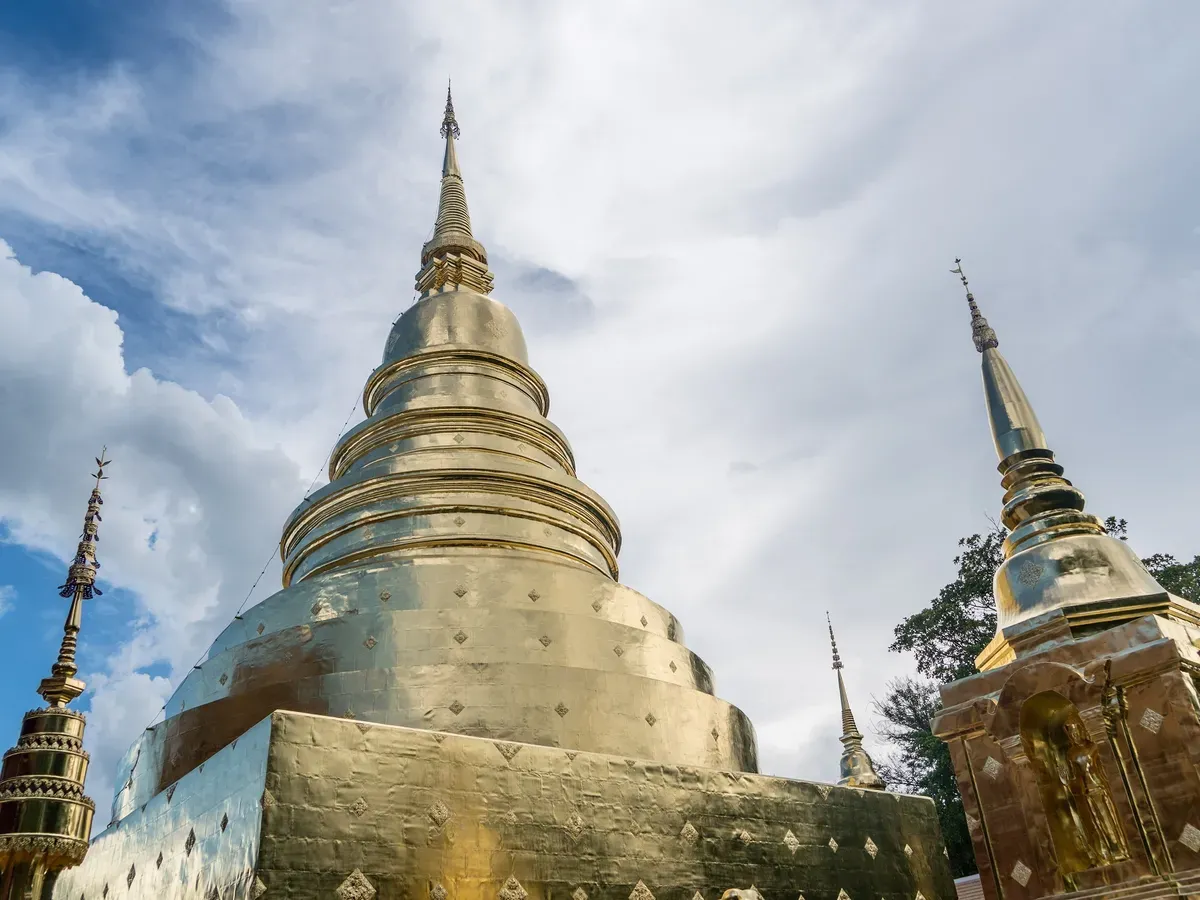
The spiritual centerpiece of the upper courtyard—a soaring, gold-plated Lanna-style chedi surrounded by gilded umbrellas, lotus flower shrines, and bronze Buddha statues. The stupa enshrines a sacred bone relic of the Buddha, which legend says was brought to the mountain peak atop a sacred white elephant.
3. Panoramic Chiang Mai Valley Viewpoint
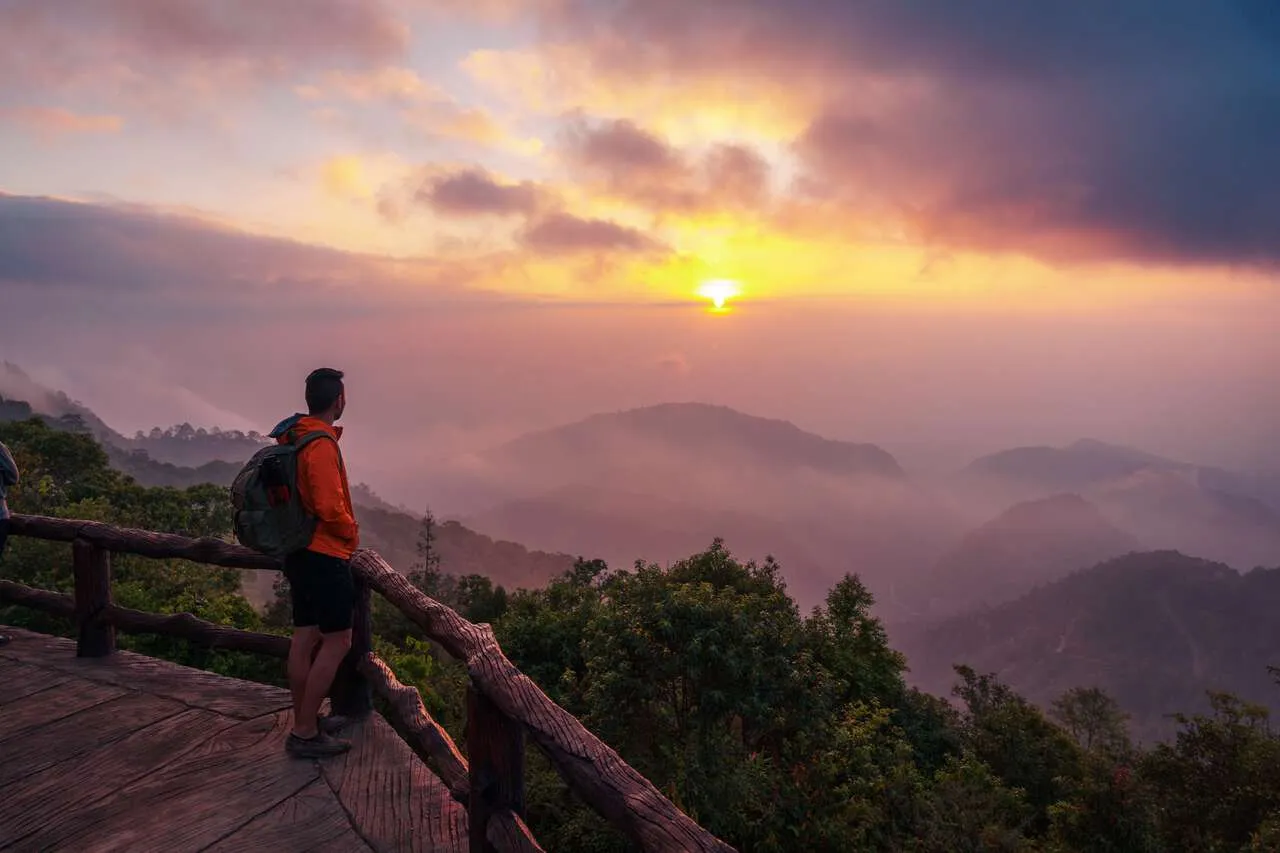
The expansive outer terrace of the temple offers breathtaking 180-degree vistas overlooking Chiang Mai city, the airport runway, Ping River valley, and distant mountain ranges. On clear days, the entire Old City grid and its surrounding moat are visible below.
4. White Elephant Legend Statue & Shrine
A dedicated shrine featuring a statue of the royal white elephant. According to 14th-century Lanna folklore, the white elephant carried the sacred Buddha relic into the jungle, trumpeted three times, knelt down at this exact peak, and passed away—signaling the divine site for the temple's construction.
Key Highlights & Attraction Summary
- Gleaming Golden Chedi: 14th-century gold-plated Lanna stupa enshrining sacred Buddha relics.
- 306-Step Naga Staircase: Iconic serpent-fronted forest staircase leading to the summit.
- Panoramic City Overlook: Unobstructed mountain terrace views over the Chiang Mai Ping River valley.
- Sacred White Elephant Legend: Historic royal shrines and intricate Lanna murals depicting Buddhist lore.
How to Reach Wat Phra That Doi Suthep
Located on Doi Suthep Mountain along Route 1004, easily accessible via local transport.
By Shared Red Songthaew (Most Popular & Affordable)
Local red passenger trucks (Songthaew) line up outside **Chang Phuak Gate (North Gate)**, **Chiang Mai Zoo**, and **Maya Shopping Mall**. Shared rides up the mountain cost around **50 to 80 THB per person** each way. Private charters cost approximately 300 to 500 THB.
By Rental Scooter or Private Driver
Driving up Route 1004 (Huay Kaew Road) from the Old City takes about 30 to 40 minutes. The road is fully paved and scenic, though winding mountain curves require cautious driving.
Best Time to Visit
Operating hours, light conditions, and daily monk chanting govern the ideal visiting strategy.
Opening Hours
Open daily year-round from **06:00 AM to 08:00 PM**.
Optimal Visiting Strategy
Arrive early between **06:00 AM and 07:30 AM** to watch sunrise over Chiang Mai, witness morning monk almsgiving, and enjoy cool, peaceful courtyards before tour groups arrive. Alternatively, visit between **05:00 PM and 06:30 PM** to listen to evening monk chanting inside the courtyard, watch sunset, and admire the golden chedi lit up against the night sky.
Top Nearby Attractions on Doi Suthep
1. Wat Pha Lat (Hidden Jungle Temple) (5 km down the mountain)
A tranquil 14th-century forest temple tucked away alongside a mountain waterfall stream, accessible via the historic **Monk's Trail** hiking path.
2. Bhubing Palace (Royal Winter Residence) (4 km further up)
The royal winter residence of the Thai Royal Family, famous for its extensive temperate rose gardens and pine forests.
3. Khun Chang Kian Hmong Village (12 km further up)
A traditional Hmong hill-tribe village famous for coffee plantations and pink Wild Himalayan Cherry Blossoms blooming in January/February.
Things to Do at Wat Phra That Doi Suthep
- Walk Around the Golden Chedi: Perform traditional merit-making by walking clockwise around the stupa three times while holding lotus flowers and incense.
- Climb or Ride the Funicular: Walk up the 306 Naga serpent steps or take the cable car elevator (20 THB).
- Receive a Monk Blessing: Receive a sprinkled water blessing and a woven white wrist thread (*Sai Sin*) from a resident Buddhist monk inside the main hall.
- Photograph Sunrise or Night Vistas: Capture panoramic views of Chiang Mai city twinkling below.
Local Food and Culinary Options
The market plaza at the base of the Naga staircase features stalls serving Northern Thai specialties.
Must-Try Culinary Options Nearby
- Khao Soi (Northern Thai Curry Noodles): Rich coconut curry noodles with chicken or beef topped with crispy egg noodles and pickled mustard greens at base market stalls.
- Sai Oua (Northern Thai Herbal Sausage): Aromatic grilled pork sausage infused with lemongrass, kaffir lime, and red curry paste.
- Fresh Mountain Coffee & Fresh Fruit Smoothies: Locally grown arabica coffee brewed hot or iced alongside mango and coconut smoothies.
Where to Stay: Accommodation Options
Visitors typically stay in Chiang Mai Old City, Nimmanhemin Road, or mountain boutique resorts.
Hotels & Mountain Resorts ($25 – $180 USD / 800 – 6,000 THB per night)
- Phra Singh Village / Rachamankha Hotel / Cross Chiang Mai Riverside / Oasis Baan Saen Doi Resort: Boutique heritage properties in the Old City or luxury mountain-view resorts situated near the foot of Doi Suthep.
Budget Travel Guide & Admission Fees
- Temple Admission Ticket: Foreign adult entrance fee is **30 THB per person**. Thai citizens enter for free.
- Funicular Cable Car Ticket: Optional funicular cable car ride costs **20 THB** each way.
- Inexpensive Transportation: Shared red songthaew trucks from Chang Phuak Gate cost **50–80 THB** each way.
Sample Half-Day Itinerary
- 06:00 AM: Board a red songthaew at Chang Phuak Gate up to **Wat Phra That Doi Suthep**.
- 06:45 AM: Walk up the **306-step Naga Staircase** in early morning light and watch sunrise over Chiang Mai.
- 07:30 AM: Walk around the **Golden Central Chedi** and receive a white thread wrist blessing from a monk.
- 09:00 AM: Head 5 km back down the mountain to explore the peaceful forest trails of **Wat Pha Lat**.
- 11:00 AM: Return to the base of the mountain for a bowl of *Khao Soi* near Maya Shopping Mall.
Essential Rules and Visitor Guidelines
- Strict Modest Dress Code: Shoulders, chest, and knees must be fully covered. Sleeveless shirts, tank tops, shorts, mini-skirts, and tight leggings are forbidden. Sarongs can be rented at the entrance.
- Remove Shoes in Sacred Courtyards: Footwear must be removed before stepping onto the tile floor of the inner golden chedi courtyard.
- Respectful Conduct: Maintain quiet behavior, avoid pointing feet at Buddha images or monks, and ask permission before photographing resident monks.
Frequently Asked Questions (FAQs)
1. Where is Wat Phra That Doi Suthep located?
It is located on Doi Suthep mountain in Doi Suthep-Pui National Park, about 15 km west of Chiang Mai Old City.
2. What are the operating hours?
Open daily year-round from **06:00 AM to 08:00 PM**.
3. How much is the entrance fee?
Foreign adult admission is **30 THB** per person (plus 20 THB for the optional funicular cable car). Free for Thai citizens.
4. What is the dress code?
Modest temple attire is required—shoulders and knees must be completely covered.
5. How many steps are on the Naga staircase?
There are **306 steps** flanked by green-and-gold Naga serpent railings.
6. Is there an alternative to walking the stairs?
Yes, an enclosed funicular cable car elevator runs to the summit courtyard for 20 THB.
7. What is the legend behind the temple's founding?
A sacred white elephant carried a Buddha relic up the mountain, trumpeted three times, knelt down, and passed away, marking the sacred site in 1383.
8. How do you reach Doi Suthep from the Old City?
By shared red songthaew truck (50–80 THB), private driver, Grab, or rental scooter via Route 1004.
9. What nearby attractions can be combined?
**Wat Pha Lat (Hidden Jungle Temple)**, **Bhubing Palace**, and **Khun Chang Kian Hmong Village**.
10. How long does a visit take?
A typical visit takes **1.5 to 2.5 hours** (excluding travel time up the mountain).
Conclusion
Wat Phra That Doi Suthep stands out as Northern Thailand's ultimate spiritual and cultural landmark, where a 14th-century gold-plated chedi, 306-step Naga serpent staircases, sacred Buddha relics, panoramic valley vistas, and rich Lanna traditions converge high above Chiang Mai. From watching sunrise over the city and walking around the golden stupa to receiving monk blessings and exploring hidden jungle temples nearby, Doi Suthep delivers an unmissable mountain journey. Dress modestly, take a red songthaew up the mountain, and explore Wat Phra That Doi Suthep Chiang Mai!
 Translate