 Translate
Wat Phra Kaew
About Wat Phra Kaew
Introduction to Wat Phra Kaew
Within the walled compound of Bangkok's Grand Palace, on the eastern bank of the Chao Phraya River, stands Wat Phra Kaew — the Temple of the Emerald Buddha and, by most measures, the single most important Buddhist site in Thailand. Its official name, Wat Phra Sri Rattana Satsadaram, translates roughly to the temple of the auspicious image crafted from a precious stone, a reference to the small but immensely revered jade Buddha figure enshrined within its main ordination hall. Scholars have compared the temple's spiritual weight for Thai Buddhists to that of Notre-Dame for Catholics or the Great Mosque of Mecca for Muslims, and among Thailand's more than 40,000 Buddhist temples, none carries greater national significance.
What makes Wat Phra Kaew unusual, even among Thailand's grandest temples, is that it has never functioned as a monastery. There are no resident monks here, no dormitories, no daily almsgiving rounds — it exists solely as the royal chapel of the Chakri dynasty, a private place of worship for the king and court that has, since the late 18th century, also been open to the public. Every surface within its walls, from gilded stupas to intricately painted cloister murals depicting the entirety of the Thai Ramakian epic, reflects more than two centuries of continuous royal patronage, with each successive Thai monarch adding, restoring, or embellishing the complex as an act of religious merit.
This guide covers the temple's history and the extraordinary journey of the Emerald Buddha itself, how to reach the complex, the best time to visit, its key attractions, food, hotels, a realistic itinerary, nearby places, practical travel tips, and answers to the questions travelers ask most often before visiting.
Why Wat Phra Kaew Stands Apart from Other Bangkok Temples
Bangkok is home to thousands of Buddhist temples, and many first-time visitors arrive uncertain about which ones genuinely merit priority over the others. Wat Phra Kaew's distinction isn't simply scale or ornamentation — it's the unbroken continuity of royal devotion it represents, the fact that the reigning Thai king still personally performs the seasonal robe-changing ceremony here, and the sheer improbability of the Emerald Buddha's own centuries-long journey before finally settling in this one location. For travelers with limited time in Bangkok, this is generally considered the single non-negotiable stop.
History of Wat Phra Kaew
The story of Wat Phra Kaew is inseparable from the story of the Emerald Buddha itself, an image whose documented journey across mainland Southeast Asia spans several kingdoms and more than five centuries before it finally came to rest in Bangkok. Few religious artifacts anywhere in the world can claim a comparably well-documented, multi-kingdom itinerary, and that history is essential to understanding why the image commands such reverence today.
The Discovery of the Emerald Buddha
According to tradition, the Emerald Buddha was discovered in 1434 in the northern Thai city of Chiang Rai, when lightning struck a stupa at a temple then known as Wat Pa Yia, cracking open a stucco-covered image to reveal a green stone Buddha figure underneath. The temple was renamed Wat Phra Kaew in honor of the discovery, a name later carried south to Bangkok. Despite its popular name, the figure is not carved from emerald at all, but from a solid block of green jade or jasper, sculpted in the meditating virasana pose in the artistic style of the Lanna school of Northern Thailand, and standing just 66 centimeters tall. The stucco covering that had concealed the image for an unknown period is itself part of what makes the discovery story so compelling — no one alive at the time of the lightning strike had any idea what lay beneath the surface.
A Journey Across Kingdoms
Following its discovery, the Emerald Buddha embarked on a remarkable multi-century journey through the courts of several Southeast Asian kingdoms. An early attempt to move the image from Chiang Rai to the larger city of Chiang Mai was, according to legend, repeatedly thwarted when the elephant carrying it diverted its course toward Lampang instead — interpreted by King Samfangkaen as a sign that spiritual forces wished the image to remain there, where it stayed until 1468. In the mid-16th century, King Tiloka of Chiang Rai had it brought to Chiang Mai and installed in a niche at Wat Chedi Luang. From there, the image passed into Laotian hands, spending time in Luang Prabang and later Vientiane for well over two centuries, becoming closely associated with Lao royal ceremony during this long period away from Thai territory, a chapter of its history still remembered and occasionally referenced in Lao-Thai diplomatic relations today.
Return to Siam and the Founding of Bangkok
The Emerald Buddha's return to Thai soil came in 1778, when a Siamese military campaign against Laos, led by the general who would later become King Rama I, recaptured the image and brought it back to Thonburi, then the Siamese capital on the western bank of the Chao Phraya. When Rama I founded the Chakri dynasty and established Bangkok as the new capital in 1782, moving the seat of government across the river to the eastern bank, the Emerald Buddha moved with it. Construction of a dedicated royal temple to house the image began in 1783, and by 1784 to 1785 the Emerald Buddha had been permanently installed within the newly completed ordination hall of Wat Phra Kaew, where it has remained ever since — now well over two centuries in residence at a single site for the first time in its recorded history, a striking contrast to the centuries of movement that preceded it.
Modeled on Ayutthaya's Lost Grandeur
Rama I deliberately ordered the floor plan of the new Grand Palace and its royal temple to mirror that of the Grand Palace at Ayutthaya, the Siamese capital that had served as the kingdom's seat of power for 417 years before its destruction by Burmese forces in 1767. This decision was a conscious act of continuity, an attempt to preserve something of Ayutthaya's memory and legitimacy within the newly founded capital, even as the actual construction relied on wood and brick salvaged from the ruined former city, a detail that lends the new temple a poignant, literal connection to the kingdom it succeeded.
Two Centuries of Royal Embellishment
Since Rama I's original construction, every successive Chakri monarch has personally overseen additions, restorations, and embellishments to Wat Phra Kaew, a tradition understood in Thai Buddhist practice as an act of religious merit-making as well as dynastic legitimization. Major expansion and modernization took place under King Rama IV and King Rama V between 1853 and 1910, and the temple's extensive Ramakian murals, first painted during Rama I's reign, have been restored or entirely repainted roughly every fifty years given Bangkok's humid climate, with the most recent major repainting carried out in the 1970s ahead of the Chakri dynasty's 1982 bicentennial celebrations, a project that involved teams of specialist conservators working to match the original 18th-century painting techniques as closely as possible.
The Emerald Buddha and Public Health
For much of its history in Bangkok, the Emerald Buddha was periodically taken out in ceremonial processions during times of epidemic disease, reflecting a widespread belief that the image's spiritual power could help ward off illness — most notably during a severe cholera outbreak in 1820. This practice ended under King Rama IV, who reigned from 1851 to 1868 and, influenced by an early understanding of germ theory, believed disease spread through biological rather than purely spiritual means. Since his reign, the Emerald Buddha has remained permanently within Wat Phra Kaew, its only movement now confined to the King's own seasonal robe-changing ceremony, a shift that itself reflects the gradual modernization of Thai royal and religious practice across the 19th century.
How to Reach Wat Phra Kaew
Located in the historic heart of Bangkok's Phra Nakhon district, Wat Phra Kaew and the Grand Palace are among the most centrally located and accessible major attractions in the city, though navigating the final approach requires a little care given the density of traffic and the occasional presence of scam touts near the entrance.
By Chao Phraya Express Boat
- The most scenic and commonly recommended route is via the Chao Phraya Express Boat (orange flag line), disembarking at Tha Chang Pier (N9), just a five-minute walk from the palace entrance, and offering river views that make the approach itself part of the experience.
- Travelers connecting from the BTS Skytrain can take the Silom Line to Saphan Taksin Station, exit toward Sathorn Pier, and transfer onto the express boat heading north to Tha Chang.
By Taxi, Grab, or Tuk-Tuk
- Metered taxis and Grab cars can drop passengers directly on Na Phra Lan Road, at the palace's main entrance, though traffic during Bangkok's rush hours (roughly 7-9 AM and 5-8 PM) can add considerable time, sometimes making the boat option faster even when it involves an extra transfer.
- Tuk-tuks are a convenient option from nearby areas such as Khao San Road, though it's essential to agree on a fare before departing, since overcharging is common on this particular route.
For NRI and US-Based Travelers
Travelers arriving in Bangkok from the US typically fly into Suvarnabhumi or Don Mueang International Airport, connect to central Bangkok by taxi, Airport Rail Link, or hotel transfer, and visit Wat Phra Kaew as one of the first stops on their Bangkok itinerary given its status as the city's most iconic single attraction. Basing yourself near the Chao Phraya riverfront or the Old City makes the temple easy to reach on foot or by a short boat ride, and simplifies logistics for the rest of a Bangkok stay.
Best Time to Visit Wat Phra Kaew
Ideal Time of Day: Early Morning
Arriving right at the 8:30 AM opening is by far the best strategy for avoiding both the worst of Bangkok's midday heat and the large tour groups that begin arriving in force by around 9:30 AM. Visitors who arrive at opening consistently describe a noticeably calmer, less crowded experience than those who show up even an hour later, when queues into the main ordination hall can back up across the entire courtyard, sometimes taking well over an hour to clear during the busiest midday stretch.
Ideal Months: November to February
Thailand's cool, dry season, running roughly from November through February, offers the most comfortable conditions for the extended outdoor walking involved in a thorough temple and palace visit, avoiding both the intense heat of the hot season and the heavy rainfall of the monsoon months. Daytime temperatures during this window remain manageable enough for a leisurely multi-hour visit without requiring frequent breaks to escape the sun.
Avoiding Buddhist Holidays
Major Buddhist holidays on the Thai calendar can bring significantly larger crowds and, occasionally, closures or restricted access for religious ceremonies. Checking the current Thai calendar before finalizing travel dates, particularly if your trip falls around a major holiday period, is worth the extra step, since even a single overlapping festival day can substantially change the crowd levels you'll encounter.
Daily Timings
Wat Phra Kaew and the Grand Palace are generally open daily from 8:30 AM to 3:30 PM, with ticket sales ending in the mid-to-late afternoon. The complex can occasionally close to the public without much advance notice for official royal ceremonies, so it's worth checking current status before setting out, particularly given how often unrelated street touts falsely claim the palace is closed as a way of diverting tourists toward other, often overpriced, shops or tours.
Top Attractions Within the Complex
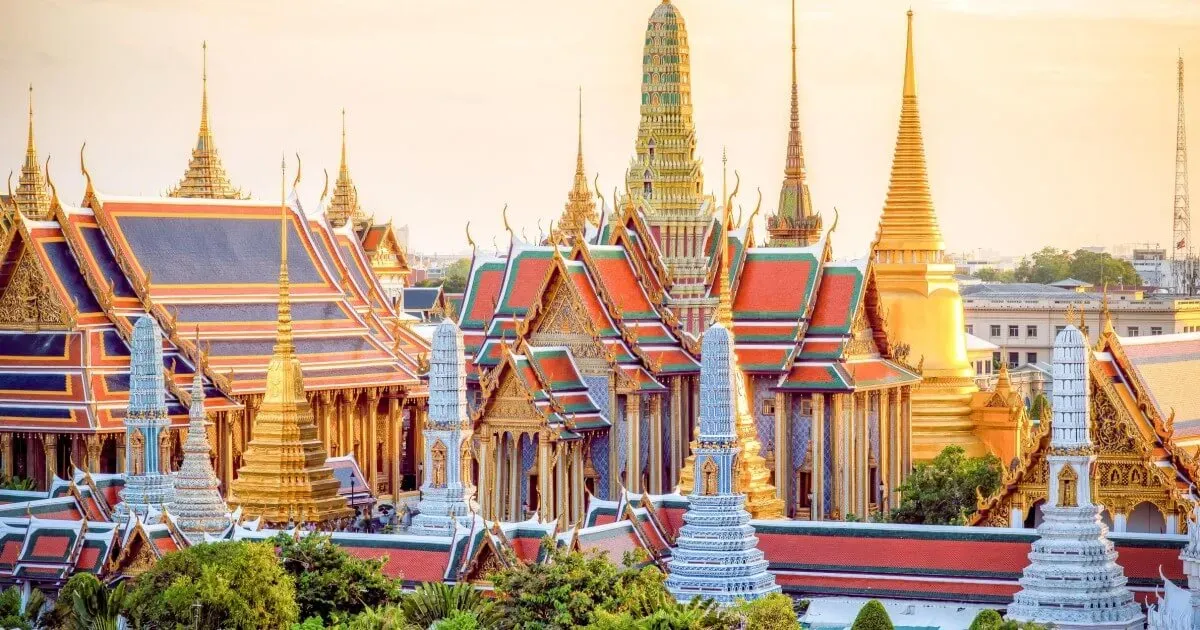
Wat Phra Kaew is not a single building but an extensive complex of shrines, halls, and monuments, and understanding its key landmarks helps make sense of what can otherwise feel like an overwhelming amount to see in a single visit, particularly for first-time visitors unfamiliar with the layout.
The Emerald Buddha
Housed within the main ubosot (ordination hall), the Emerald Buddha itself remains the spiritual centerpiece of the entire complex — a relatively small, 66-centimeter jade image dressed in seasonal gold garments that only the Thai king is permitted to change, three times a year to mark the summer, rainy, and cool seasons. Photography of the image itself is strictly prohibited inside the hall, and visitors are expected to sit or kneel respectfully rather than stand directly in front of the image during their visit.
The Ramakian Murals
Running along the interior walls of the cloister that encircles the temple compound, this extensive series of murals depicts the complete narrative of the Ramakian, Thailand's own retelling of the Indian Ramayana epic, spread across 178 individual painted sections. Though first painted during Rama I's reign, the murals have been restored or repainted roughly every fifty years due to Bangkok's humid climate, with explanatory captions for each scene devised during the reign of King Rama V, making it possible for visitors with even a passing familiarity with the story to follow the full narrative arc simply by walking the cloister's length.
The Golden Chedis and Prangs
Among the complex's most photographed features are its gleaming golden stupas and towers, dazzling examples of traditional Thai religious architecture that dominate the temple's skyline and provide some of the most iconic images associated with Bangkok as a whole, their gold-leaf-covered surfaces designed to catch and reflect sunlight throughout the day in a way that changes the complex's overall visual character from morning to afternoon.
The Miniature Angkor Wat Model
A detailed scale model of Cambodia's famous Angkor Wat temple complex stands within the grounds, commissioned during the reign of King Rama IV at a time when Cambodian territory fell under Thai influence — an unusual and historically telling architectural inclusion within an otherwise entirely Thai religious complex, and a detail many visitors overlook entirely while focused on the temple's more prominent golden structures.
The Royal Libraries
Two libraries within the complex were built specifically to house and protect important Buddhist scriptures, reflecting the temple's role not just as a devotional site but as a center for the preservation of Buddhist textual tradition within the kingdom, a function that continues to shape how the site is maintained and staffed today.
The Adjoining Grand Palace
While technically a separate but directly connected complex, most visitors continue on to the Grand Palace itself after exiting Wat Phra Kaew, where a markedly different, more European-influenced architectural style (aside from the traditional Thai-style roofs) contrasts sharply with the temple's distinctly Thai design, a juxtaposition that reflects the broader 19th-century modernization efforts undertaken by successive Chakri monarchs.
Hidden Gems and Lesser-Known Details
The Guardian Statues
Massive mythological guardian figures known as yaksha line various gates and entrances throughout the complex, each with individual names and characteristics drawn from the Ramakian epic — details that reward visitors who take time to look closely rather than simply passing by, and each figure's distinctive coloring and weaponry corresponds to a specific character within the broader epic narrative told across the cloister murals.
The Quieter Southern Courtyards
While most visitors funnel directly toward the ordination hall and the most photographed golden chedis, the complex's quieter southern sections offer a calmer, less crowded perspective on the same architectural details found in the busier main areas, and a short detour here can offer a welcome break from the density of tour groups elsewhere in the compound.
The Textile and Coin Collections
The standard admission ticket typically includes access to the Queen Sirikit Museum of Textiles and the Royal Thai Decorations and Coins Pavilion within the wider palace grounds, both frequently overlooked by visitors focused solely on the temple and main palace buildings but offering worthwhile additional context on Thai royal history.
Things to Do In and Around the Complex
A thorough visit to Wat Phra Kaew naturally pairs with several of Bangkok's other major historic sites, all within easy walking or short boat distance, making it possible to build an entire day around the temple and its immediate surroundings.
- Arrive at the 8:30 AM opening to see the Emerald Buddha and main temple buildings before the crowds arrive.
- Walk the full length of the Ramakian mural cloister for a complete visual telling of the Thai Ramayana.
- Continue into the adjoining Grand Palace to see the Chakri Maha Prasat and Dusit Maha Prasat throne halls.
- Visit nearby Wat Pho, home of the Reclining Buddha, roughly 700 meters south of the palace complex.
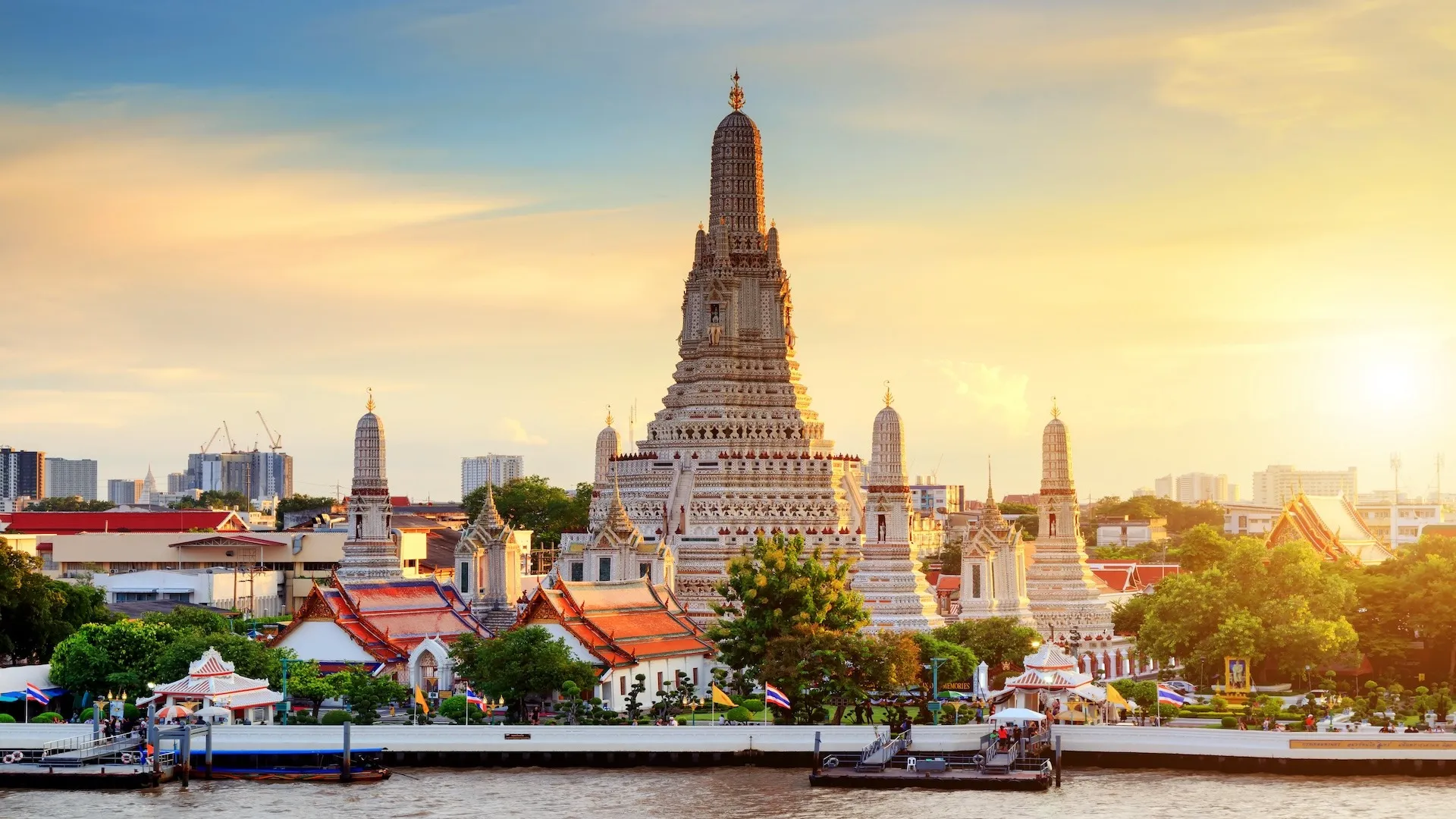
- Take a short boat crossing to Wat Arun, the Temple of Dawn, directly across the Chao Phraya River.
- Explore the Amulet Market and riverside food stalls near Tha Chang and Tha Tien piers.
- Visit the Museum of Siam for broader historical context on Thai national identity and history.
Local Food to Try
The Old City neighborhood surrounding Wat Phra Kaew is one of Bangkok's richest areas for classic street food, with generations-old vendors serving some of the city's most iconic dishes just steps from the palace walls.
Old City Bangkok Specialties
- Boat noodles — a Bangkok classic, richly flavored dark broth noodle soup, widely available in the surrounding Old City area.
- Pad thai — Thailand's signature stir-fried noodle dish, sold throughout the streets and markets near the palace.
- Mango sticky rice — a beloved Thai dessert, especially good when made with in-season mangoes from local vendors.
- Tha Tien Pier food stalls — a concentration of casual local eateries just outside the palace grounds, convenient for a quick meal before or after a visit.
Tips for Travelers
No food or drink is permitted inside the temple complex itself, so plan to eat either before entering or after exiting; the streets and piers immediately surrounding the Grand Palace offer plenty of options for both, ranging from quick street-side snacks to more substantial sit-down meals.
Where to Stay: Hotels Near Wat Phra Kaew
Bangkok's Old City and riverside districts offer a distinctly different, more historic staying experience compared to the high-rise business districts favored by many first-time visitors, and basing yourself here makes a Wat Phra Kaew visit especially convenient.
Old City and Riverside Hotels
Staying within Bangkok's historic Rattanakosin Island area or along the Chao Phraya riverfront places visitors within easy walking or short boat distance of Wat Phra Kaew, Wat Pho, and Wat Arun, making it an efficient base for exploring the city's most significant historic temples without heavy reliance on taxis.
Broader Bangkok Options
Travelers basing themselves elsewhere in Bangkok, such as the Sukhumvit or Silom districts, can still reach the palace easily via the BTS Skytrain connection to Saphan Taksin followed by a short Chao Phraya Express Boat ride, making a Wat Phra Kaew day trip perfectly manageable even from farther-flung hotel neighborhoods.
Booking Considerations
Given Wat Phra Kaew's status as Bangkok's single most visited attraction, hotels in the immediate Old City area can book up during peak tourist season; reserving accommodation well ahead of travel dates, particularly during the cooler November-to-February window, is advisable, especially for properties with direct river views.
Budget Guide
A visit to Wat Phra Kaew remains one of the more affordable major attractions in Southeast Asia relative to its historical and cultural significance.
Entrance Fees
A single 500 Thai Baht ticket covers entry to Wat Phra Kaew, the Grand Palace, and typically the Queen Sirikit Museum of Textiles, with occasional additional inclusions that have varied over time; Thai nationals and young children are admitted free. Tickets are purchased on-site at the entrance, since there is currently no separate online advance booking system for individual visitors, so be prepared for a short queue at the ticket counter even before reaching the main security checkpoint.
Approximate Daily Budgets (Thailand-Based Travel)
Costs naturally scale with comfort level, from backpacker-style public transport and street food up through private guided tours and riverside luxury dining.
- Budget traveler: Public transport via the Chao Phraya Express Boat and BTS, street food meals, and budget guesthouse accommodation — a very affordable way to experience Bangkok's historic core without sacrificing access to its top sights.
- Mid-range traveler: Taxi or Grab transport, a comfortable Old City or riverside hotel, and a mix of street food and restaurant dining.
- Comfort/luxury traveler: Private guided tours of the palace complex, a riverside luxury hotel, and fine dining along the Chao Phraya.
For International Travelers
Once in Thailand, day-to-day costs around a Wat Phra Kaew visit remain inexpensive by US standards, with international airfare typically making up the largest share of an overall Bangkok trip budget, leaving plenty of room in most travel budgets for the city's excellent food and other attractions.
Sample 2-Day Itinerary
A simple two-day structure pairs Wat Phra Kaew with Bangkok's other major riverside temples, giving a well-rounded sense of the city's historic core without feeling rushed.
Day 1: Wat Phra Kaew and the Grand Palace
- Morning: Arrive at 8:30 AM opening, visit the Emerald Buddha and main temple buildings, and walk the Ramakian mural cloister.
- Late Morning: Continue into the Grand Palace to see the Chakri Maha Prasat and Dusit Maha Prasat throne halls.
- Midday: Lunch at the food stalls near Tha Tien Pier.
- Afternoon: Walk to nearby Wat Pho to see the Reclining Buddha and traditional Thai massage school.
- Evening: Take a river cruise or sunset boat ride along the Chao Phraya.
Day 2: Wat Arun and the Old City
- Morning: Cross the Chao Phraya to visit Wat Arun, the Temple of Dawn, ideally in the softer early morning light.
- Midday: Explore the Amulet Market and Old City neighborhoods on foot.
- Afternoon: Visit the Museum of Siam for broader historical context on Thai identity and history.
- Evening: Explore Bangkok's broader dining and nightlife scene, or continue on to another part of your Thailand itinerary.
Nearby Places to Visit
Bangkok's Rattanakosin Island area, the historic core surrounding Wat Phra Kaew, is home to an unusually dense concentration of the city's most significant temples and heritage sites, all within easy walking or short boat distance.
- Wat Pho: Home of the massive Reclining Buddha and Thailand's traditional massage school, roughly 700 meters south of the Grand Palace.
- Wat Arun: The striking riverside Temple of Dawn, directly across the Chao Phraya, reachable by a short cross-river ferry.
- Sanam Luang: A large open public ceremonial ground adjacent to the palace, historically used for royal ceremonies and public gatherings.
- Museum of Siam: An interactive museum exploring Thai national identity and history, a short distance from the palace complex.
- Khao San Road: Bangkok's famous backpacker street, a short tuk-tuk or walk from the Old City area.
Building a Bangkok Old City Itinerary
Wat Phra Kaew anchors a naturally walkable circuit of Bangkok's most significant historic sites, easily combined with Wat Pho, Wat Arun, and the surrounding Rattanakosin Island neighborhood into a single, comprehensive day or two of sightseeing focused on the city's royal and religious heritage, making it possible to see the very best of historic Bangkok without ever needing a car.
Travel Tips
Given the temple's status as Thailand's most visited and most strictly regulated religious site, a little preparation goes a long way toward avoiding common first-time visitor mistakes.
- Strict dress code: Shoulders and knees must be fully covered, with closed-toe shoes required (toe-covering sandals are acceptable); tight, sheer, or torn clothing is not permitted. Free sarongs and shawls are available at the entrance for a refundable deposit if needed, though bringing your own appropriate clothing avoids any wait.
- Beware of scams: Touts and tuk-tuk drivers near the entrance sometimes falsely claim the palace is closed for a ceremony or holiday in order to redirect tourists elsewhere, often toward overpriced gem shops or unnecessary tours; the palace almost certainly remains open during posted hours, so proceed directly to the official entrance on Na Phra Lan Road regardless of what you're told on the street.
- No photography of the Emerald Buddha: Photography is strictly prohibited inside the ordination hall housing the image itself; exterior photography of the wider complex is generally permitted, so plan your best shots for the courtyards and mural cloister rather than inside the main hall.
- Arrive early: Reaching the gate right at the 8:30 AM opening offers a significantly calmer, less crowded experience than arriving even an hour later, particularly during peak tourist season when tour buses converge on the site by mid-morning.
- Allow enough time: Plan for 2-3 hours to properly see both Wat Phra Kaew and the adjoining Grand Palace without rushing, longer if you intend to walk the entire Ramakian mural cloister at a leisurely pace.
- Prohibited items: Large bags and backpacks, food and drink, selfie sticks, drones, and professional camera equipment without a permit are generally not allowed inside, so plan to leave bulky items at your hotel where possible.
- Cover tattoos where possible: Visitors with visible Buddhist or Hindu-themed tattoos are advised to cover them out of respect for the site's religious significance, particularly before entering the main ordination hall.
- Language: Thai is the primary local language, though English signage and some English-speaking staff are available throughout the complex given its status as Thailand's most visited attraction, making independent navigation manageable even without any Thai language skills.
Frequently Asked Questions
The following questions cover the practical and historical details travelers most often want clarified before visiting Wat Phra Kaew.
1. What is Wat Phra Kaew famous for?
It is famous as the home of the Emerald Buddha, Thailand's most sacred Buddha image, and as the royal chapel of the Chakri dynasty within the Grand Palace complex — widely regarded as the most important Buddhist site in the country and one of Bangkok's most visited attractions overall.
2. Is the Emerald Buddha actually made of emerald?
No — despite its name, the image is carved from a solid block of green jade or jasper rather than emerald, dating to around the 15th century and crafted in the artistic style of the Lanna school of Northern Thailand, a detail that surprises many first-time visitors.
3. How much does it cost to visit?
A single 500 Thai Baht ticket covers entry to Wat Phra Kaew, the Grand Palace, and typically the Queen Sirikit Museum of Textiles; Thai nationals and young children are admitted free, and tickets are purchased on-site at the entrance rather than in advance.
4. What are the opening hours?
The complex is generally open daily from 8:30 AM to 3:30 PM, with ticket sales ending in the mid-to-late afternoon; hours can occasionally change for official royal ceremonies, so checking current status before your visit is a sensible precaution.
5. What should I wear when visiting?
Shoulders and knees must be fully covered, and closed-toe shoes are required; tight, sheer, or torn clothing is not permitted. Free sarongs and shawls are available at the entrance for those who arrive underdressed, though bringing your own appropriate clothing avoids any wait at the loan counter.
6. Are there resident monks at Wat Phra Kaew?
No — uniquely among Thailand's major temples, Wat Phra Kaew has never functioned as a monastery and has no resident monks; it exists solely as the royal chapel of the Thai monarchy, distinguishing it from virtually every other significant temple in the country.
7. Can I take photographs inside the temple?
Photography of the Emerald Buddha itself is strictly prohibited inside the ordination hall, though photography of the wider temple and palace grounds is generally permitted, making it possible to capture the complex's architecture even where the central image itself cannot be photographed.
8. How do I get to Wat Phra Kaew from central Bangkok?
The most popular route is the Chao Phraya Express Boat to Tha Chang Pier (N9), a five-minute walk from the entrance; alternatives include taxi, Grab, or a BTS connection to Saphan Taksin followed by a short boat ride, with the boat route often proving both more scenic and less affected by Bangkok's notorious road traffic.
9. Is it true the palace is sometimes closed to visitors?
The palace does occasionally close for official royal ceremonies, though this is far less common than the frequent scam claims made by touts and tuk-tuk drivers near the entrance; always verify current status through official sources rather than unsolicited street advice, and proceed directly to the official ticket gate to confirm for yourself.
10. How much time should I plan for a visit?
A thorough visit covering both Wat Phra Kaew and the adjoining Grand Palace typically takes 2-3 hours; allow extra time if visiting during peak tourist season, when queues can be considerably longer, and consider adding time to walk the full Ramakian mural cloister rather than only glimpsing a portion of it.
11. Can Wat Phra Kaew be combined with other nearby temples in a single day?
Yes — Wat Pho and Wat Arun are both within easy walking or short boat distance and are commonly combined with Wat Phra Kaew into a single day of Bangkok's most significant historic temple sightseeing, making for an efficient and rewarding introduction to the city's religious heritage.
Conclusion
Wat Phra Kaew offers a rare combination of profound religious significance, extraordinary architectural craftsmanship, and a genuinely remarkable historical journey — from a lightning-struck stupa in 15th-century Chiang Rai to more than two centuries of continuous residence within Bangkok's royal palace. Whether you're drawn by the Emerald Buddha's extraordinary multi-kingdom history, the sweeping visual narrative of the Ramakian murals, or simply the chance to stand within what remains, for millions of Thai Buddhists, the most sacred site in the country, Wat Phra Kaew rewards a visit that moves slowly enough to take in both its grandeur and its details. Pair it with nearby Wat Pho and Wat Arun for a full day exploring the historic heart of Thailand's capital.
Few sites anywhere in Southeast Asia compress quite so much layered history, dynastic continuity, and devotional weight into a single walled compound. From the moment visitors pass through the entrance gates to the quiet, incense-filled approach toward the ordination hall itself, Wat Phra Kaew offers a genuine sense of standing at the intersection of five centuries of Thai political and religious history — a fitting reason it remains, for most visitors, the single most memorable stop on any Bangkok itinerary.
Photo Gallery
What you'll experience
- 1
Viewing Emerald Buddha
- 2
Exploring palace murals
- 3
Learning Thai royal history
- 4
Cultural photography
Nearby Destinations
These destinations are in close proximity to Wat Phra Kaew and can be visited on the same trip.
Visit Information
Opening Hours
Entry Fee
Best Time to Visit
November to February
Location
Bangkok, Thailand
Contact
For inquiries: N/A
Best Time to Visit
Recommended: November to February
Jan
32°/21°C
peakFeb
33°/22°C
highMar
35°/24°C
highApr
36°/25°C
moderateMay
34°/25°C
lowJun
33°/25°C
lowJul
33°/25°C
lowAug
33°/25°C
lowSep
32°/24°C
lowOct
32°/24°C
moderateNov
31°/23°C
highDec
31°/21°C
peakWat Phra Kaew - Frequently Asked Questions
More temples Spots & Nearby Attractions
Wat Arun
Bangkok, Thailand
Wat Pho
Bangkok, Thailand
Wat Saket (Golden Mount)
Bangkok, Thailand
Wat Benchamabophit
Bangkok, Thailand
Wat Rong Khun (White Temple)
Chiang Rai, Thailand
Wat Rong Suea Ten (Blue Temple)
Chiang Rai, Thailand
Dream World — Bangkok
Bangkok, Thailand
Safari World & Marine Park — Bangkok
Bangkok, Thailand
SEA LIFE Bangkok Ocean World — Bangkok
Bangkok, Thailand
Siam Amazing Park — Bangkok
Bangkok, Thailand
Snow Town Bangkok — Bangkok
Bangkok, Thailand
Fantasia Lagoon Water Park — Bangkok
Bangkok, Thailand
Discover More About Bangkok
Top Picks
Also Worth Reading
Plan Your Trip Around Wat Phra Kaew
Best Time to Visit Bangkok
Thailand Trip Ideas
Eat & Celebrate in Bangkok
Share this destination:
