Introduction: The Roof of Thailand
Situated in Chom Thong District, approximately 100 kilometers (a 2-hour drive) southwest of Chiang Mai Old City, Doi Inthanon is Thailand's highest peak, standing at an impressive 2,565 meters (8,415 feet) above sea level. Named in honor of King Inthawichayanon, one of the last kings of Chiang Mai who was dedicated to preserving the northern forests, this 482-square-kilometer national park is affectionately known as "The Roof of Thailand."
Renowned for its crisp year-round cool climate, mist-covered mossy cloud forests, sweeping mountain ridges, cascading waterfalls, and vibrant Karen and Hmong hill-tribe culture, Doi Inthanon is one of Northern Thailand's most revered natural and eco-tourism destinations.
Key Attractions & Mountain Landmarks
Doi Inthanon National Park features diverse highland ecosystems and iconic cultural monuments along Route 1009:
1. The Twin Royal Pagodas (Phra Mahathat Naphamethanidon & Naphapholphumisiri)
Perched near the summit, these majestic matching pagodas were built by the Royal Thai Air Force to honor the 60th birthdays of King Bhumibol Adulyadej (Rama IX) and Queen Sirikit. Surrounded by manicured high-altitude flower gardens, they offer panoramic views over mountain valleys and sea-of-mist clouds.
2. The Summit & Ang Ka Nature Trail
The highest geographic point in Thailand features a cool, moss-draped cloud forest boardwalk (Ang Ka Trail). Surrounded by sphagnum moss, rhododendrons, and rare alpine flora, this short loop feels like a fairytale forest enveloped in mountain mist.
3. Kew Mae Pan Nature Trail
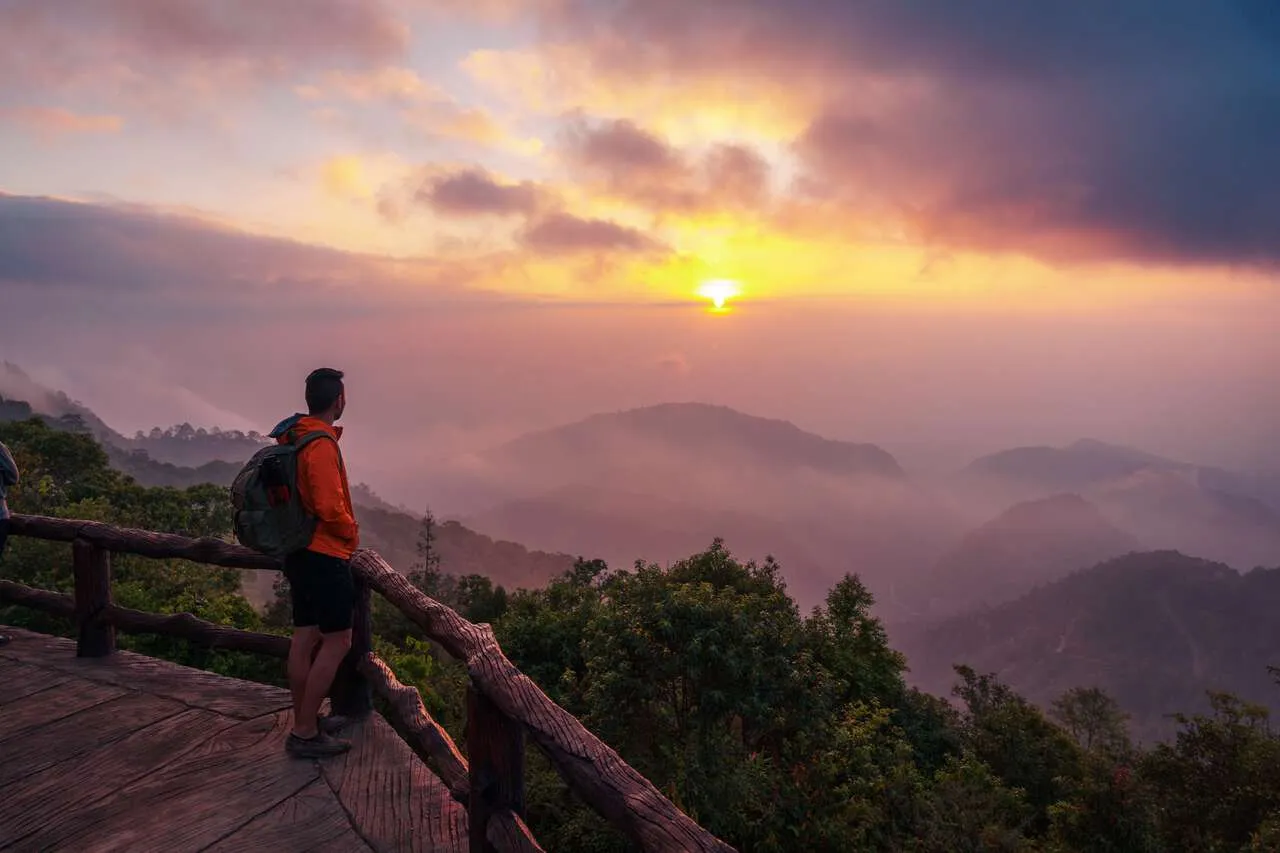
A famous 3-kilometer guided ridge walk that traverses mossy forests before emerging onto open grassland cliffs, delivering spectacular sea-of-mist sunrise views over the valley (closed annually for forest regeneration during the monsoon season from June to October).
4. Wachirathan & Mae Ya Waterfalls
Doi Inthanon houses some of Thailand's most powerful cascades. **Wachirathan Waterfall** is a roaring 80-meter-high multi-tiered waterfall producing constant rainbows, while **Mae Ya Waterfall** drops over 260 meters down terraced stone cliffs.
5. Mae Klang Luang Karen Village & Terraced Rice Fields
A local Karen hill-tribe community famous for scenic emerald terraced rice fields (peaking from September to November) and fresh, organic arabica coffee grown directly in mountain shade.
Key Highlights & Attraction Summary
- Thailand's Highest Peak: 2,565-meter summit featuring unique mossy cloud forests.
- Twin Royal Pagodas: Striking architectural monuments set inside manicured alpine gardens.
- Kew Mae Pan Ridge Trail: Famous 3 km eco-trail delivering panoramic sea-of-mist views.
- Thunderous Waterfalls: Spectacular cascades including Wachirathan and Mae Ya waterfalls.
How to Reach Doi Inthanon
Located in Chom Thong District, reachable via Highway 108 and Route 1009 from Chiang Mai city.
By Guided Day Tour (Most Popular)
Booking a full-day guided tour from Chiang Mai Old City includes round-trip hotel pickup, national park fees, local guide, lunch, and stops at the summit, pagodas, waterfalls, and Karen coffee village.
By Rental Car / Scooter / Private Driver
Driving via Highway 108 south to Chom Thong and turning right onto Route 1009 reaches the park entrance in about 1.5 to 2 hours. Roads are smooth and fully paved, though steep mountain curves near the top require cautious driving.
Best Time to Visit
Highland weather varies sharply between seasons.
Cool Dry Season (November to February)
The peak travel window! Summit temperatures drop to 5°C–12°C (occasionally freezing near 0°C at pre-dawn), bringing crisp mountain air, clear blue skies, and active Kew Mae Pan ridge walking.
Rice Terrace Season (September to November)
Karen village rice fields turn vibrant emerald green and golden yellow, creating stunning photography opportunities.
Top Nearby Attractions
1. Wat Phra That Si Chom Thong (Chom Thong Town)
An ancient Lanna temple located at the base of the mountain housing sacred Buddha relics.
2. Pha Chor Canyon (Mae Wang)
A dramatic natural canyon featuring 30-meter-high carved soil cliffs and stone pillars formed by ancient river erosion.
3. Elephant Jungle Sanctuary Chiang Mai (35 km north)
An ethical, chain-free elephant rescue sanctuary located in the neighboring Mae Wang valley.
Things to Do at Doi Inthanon
- Stand at Thailand's Highest Point: Photograph the official 2,565m summit marker in the cloud forest.
- Tour the Twin Pagodas & Gardens: Walk through alpine flower gardens and explore Buddha shrines inside the pagodas.
- Hike the Kew Mae Pan Trail: Walk along cliff edges with a local Hmong guide to spot mountain goral and sea of mist.
- Sip Karen Arabica Coffee: Taste fresh drip coffee prepared by local Karen villagers at Mae Klang Luang.
Local Food and Culinary Delights
The park features local royal project restaurants and Hmong market stalls.
Must-Try Culinary Specialties
- Royal Project Agricultural Restaurant: Fresh highland rainbow trout, organic vegetables, and herbal chicken soups.
- Fresh Highland Fruits & Roasted Nuts: Fresh strawberries, macadamia nuts, dried fruits, and sweet potatoes sold at the Hmong Royal Project Market.
- Mae Klang Luang Arabica Coffee: Hand-roasted mountain coffee brewed in bamboo pipes by local Karen villagers.
Where to Stay: Accommodation Options
Visitors can stay in mountain glamping sites, park bungalows, or central Chiang Mai city hotels.
Mountain Lodges & Park Cabins ($20 – $90 USD / 700 – 3,200 THB per night)
- Doi Inthanon National Park Headquarters Bungalows / Inthanon Mountain Camp / Mae Klang Luang Hillside Homestays: Cozy wooden cabins and glamping tents surrounded by pine trees and rice terraces.
Budget Travel Guide & Admission Fees
- National Park Entry Fee: Official foreign adult entrance fee is **300 THB** (150 THB for children ages 3–14), plus **30 THB** for a car permit.
- Twin Pagodas Entry Fee: Entrance to the Twin Royal Pagodas is a separate fee of **100 THB per person**.
- Kew Mae Pan Local Guide Fee: Hiring a mandatory local Hmong forest guide at the trail entrance costs **200 THB per group** (up to 10 hikers).
Sample 1-Day Itinerary
- 07:00 AM: Depart central Chiang Mai Old City via rental car, taxi, or tour van toward Route 1009.
- 09:00 AM: Arrive at the summit; walk the mossy **Ang Ka Nature Trail** and see the highest point marker.
- 10:15 AM: Visit the **Twin Royal Pagodas** and stroll through the high-altitude flower gardens.
- 11:45 AM: Hike the **Kew Mae Pan Nature Trail** (2-3 hours) with a local Hmong guide.
- 02:00 PM: Enjoy lunch at the **Royal Project Restaurant** and shop at the Hmong market.
- 03:15 PM: Visit roaring **Wachirathan Waterfall** for photos and rainbows.
- 04:30 PM: Stop at **Mae Klang Luang Karen Village** for fresh drip arabica coffee before returning to Chiang Mai.
Essential Rules and Visitor Guidelines
- Warm Clothing Mandatory: Summit pre-dawn and morning temperatures routinely drop below 10°C—bring a thick jacket, sweater, and warm pants.
- Modest Temple Dress Code: Shoulders and knees must be covered when entering the Twin Royal Pagodas.
- Stay on Designated Trails: Do not step off wooden boardwalks on nature trails to preserve fragile moss and endemic plant species.
Frequently Asked Questions (FAQs)
1. Where is Doi Inthanon located?
It is located in Chom Thong District, Chiang Mai Province, Northern Thailand, about 100 km (2 hours drive) southwest of Chiang Mai Old City.
2. How tall is Doi Inthanon?
It is Thailand's highest peak at **2,565 meters (8,415 feet)** above sea level.
3. How much is the national park entrance fee?
The foreign adult entrance fee is **300 THB** (150 THB for children), plus 30 THB for a vehicle. The Twin Pagodas cost an additional 100 THB.
4. Does it get cold at Doi Inthanon?
Yes! It is cold year-round compared to the lowland city, with winter temperatures dropping between 5°C and 12°C (occasionally near 0°C).
5. What is Kew Mae Pan?
A famous 3 km ridge nature trail offering panoramic views above the clouds, open from November to May.
6. How do you reach Doi Inthanon from Chiang Mai?
Take a 2-hour drive via Highway 108 and Route 1009 by rental car, private driver, or guided day tour.
7. What are the main waterfalls in the park?
**Wachirathan Waterfall**, **Mae Ya Waterfall**, and **Sirithan Waterfall**.
8. Who lives inside the national park?
Local indigenous **Karen** and **Hmong** hill-tribe communities who practice sustainable agriculture and coffee farming.
9. What local food should I try?
Highland rainbow trout from the Royal Project, local Karen arabica coffee, and fresh strawberries.
10. What is the best season to visit?
The cool dry season from **November to February** offers optimal clear views, cool weather, and open hiking trails.
Conclusion
Doi Inthanon National Park stands out as Northern Thailand's ultimate mountain sanctuary, where 2,565-meter cloud forests, Twin Royal Pagodas, sea-of-mist ridge hikes at Kew Mae Pan, thunderous waterfalls, and local Karen coffee culture converge in Chiang Mai. From standing at the highest point in Thailand and walking mossy boardwalks to admiring royal gardens and tasting fresh highland arabica coffee, Doi Inthanon delivers an unmissable travel adventure. Plan your day trip, pack warm jackets, and explore Doi Inthanon Chiang Mai!
 Translate