 Translate
Wat Pho
About Wat Pho
Introduction: Bangkok's Temple of the Reclining Buddha
Situated in the historic Phra Nakhon District directly south of the Grand Palace, Wat Phra Chetuphon Wimon Mangkhalaram Rajwaramahawihan (commonly known as Wat Pho or the Temple of the Reclining Buddha) is one of Bangkok's oldest, largest, and most important royal temple complexes. Built during the Ayutthaya era and later restored by King Rama I, Wat Pho holds the status of a First-Class Royal Temple and serves as Thailand's primary center for traditional education, medicine, and Thai massage.
Spanning over 20 acres, Wat Pho is world-renowned for housing the majestic 46-meter gold-plated Reclining Buddha statue, over 1,000 Buddha images, 95 colorful ceramic-tiled pagodas, and the traditional Thai massage school recognized on UNESCO's Intangible Cultural Heritage list.
Key Attractions & Sacred Architectural Highlights
Wat Pho features distinct sacred assembly halls, courtyards, and artistic details:
1. The Chapel of the Reclining Buddha (Phra Buddhasaiyart)
The main highlight of the temple—a massive 46-meter long and 15-meter high gold-leaf-covered Buddha image depicting the Buddha entering Nirvana. The soles of the Buddha's feet are 5 meters long and exquisitely inlaid with mother-of-pearl depicting the 108 auspicious characteristics of a true Buddha. Visitors line up along the chapel corridor to drop bronze coins into 108 alms bowls for good fortune.
2. The Four Great Chedis (Phra Maha Chedi Si Ratchakarn)
Four towering 42-meter-high stupas decorated with colorful mosaic floral tiles, each dedicated to one of the first four Chakri Dynasty kings (King Rama I through King Rama IV).
3. Birthplace of Traditional Thai Massage (Wat Pho Massage School)
Known as Thailand's first public university, Wat Pho features stone inscriptions and marble illustrations explaining traditional medicine, pressure points, and herbal remedies. Visitors can experience authentic traditional Thai massage or herbal foot massages right inside the temple pavilion.
4. The Main Ordination Hall (Ubosot)
Surrounded by a double cloister holding 394 gilded Buddha statues, the main Ubosot houses the sacred Phra Buddha Deva Patimakorn golden Buddha statue seated on a three-tiered pedestal containing the ashes of King Rama I.
Key Highlights & Attraction Summary
- 46-Meter Gold Reclining Buddha: Iconic gold-plated Buddha with mother-of-pearl feet inlays.
- UNESCO-Recognized Traditional Massage: On-site birthplace of traditional Thai massage treatment.
- 95 Ceramic Stupas: Towering chedis and cloisters housing over 1,000 Buddha statues.
- Historic Royal Temple: Adjacent to the Grand Palace in Bangkok's Rattanakosin Island.
How to Reach Wat Pho
Located on Sanam Chai Road, easily accessible via MRT and Chao Phraya river ferries.
By MRT Subway (Most Direct)
Take the MRT Blue Line directly to **Sanam Chai Station** (Exit 1). Wat Pho's entrance gate is just a 3 to 5-minute walk from the station exit.
By Chao Phraya Express Boat
Take the BTS Skytrain to **Saphan Taksin Station** (Exit 2) and walk to Sathorn Pier. Board the Chao Phraya Express Boat to **Tha Tien Pier (N8)** or **Rajinee Pier (N7)** and walk 3 minutes to the temple entrance.
Best Time to Visit
Operating hours and daily visitor traffic govern the optimal experience.
Opening Hours
Open daily year-round from **08:00 AM to 07:30 PM**.
Optimal Visiting Strategy
Arrive right at **08:00 AM** to explore the Reclining Buddha chapel in cool morning temperatures before tour groups arrive. Booking your traditional Thai massage session early in the morning also avoids long waiting times.
Top Nearby Attractions
1. Wat Arun (Temple of Dawn) (Across the River)
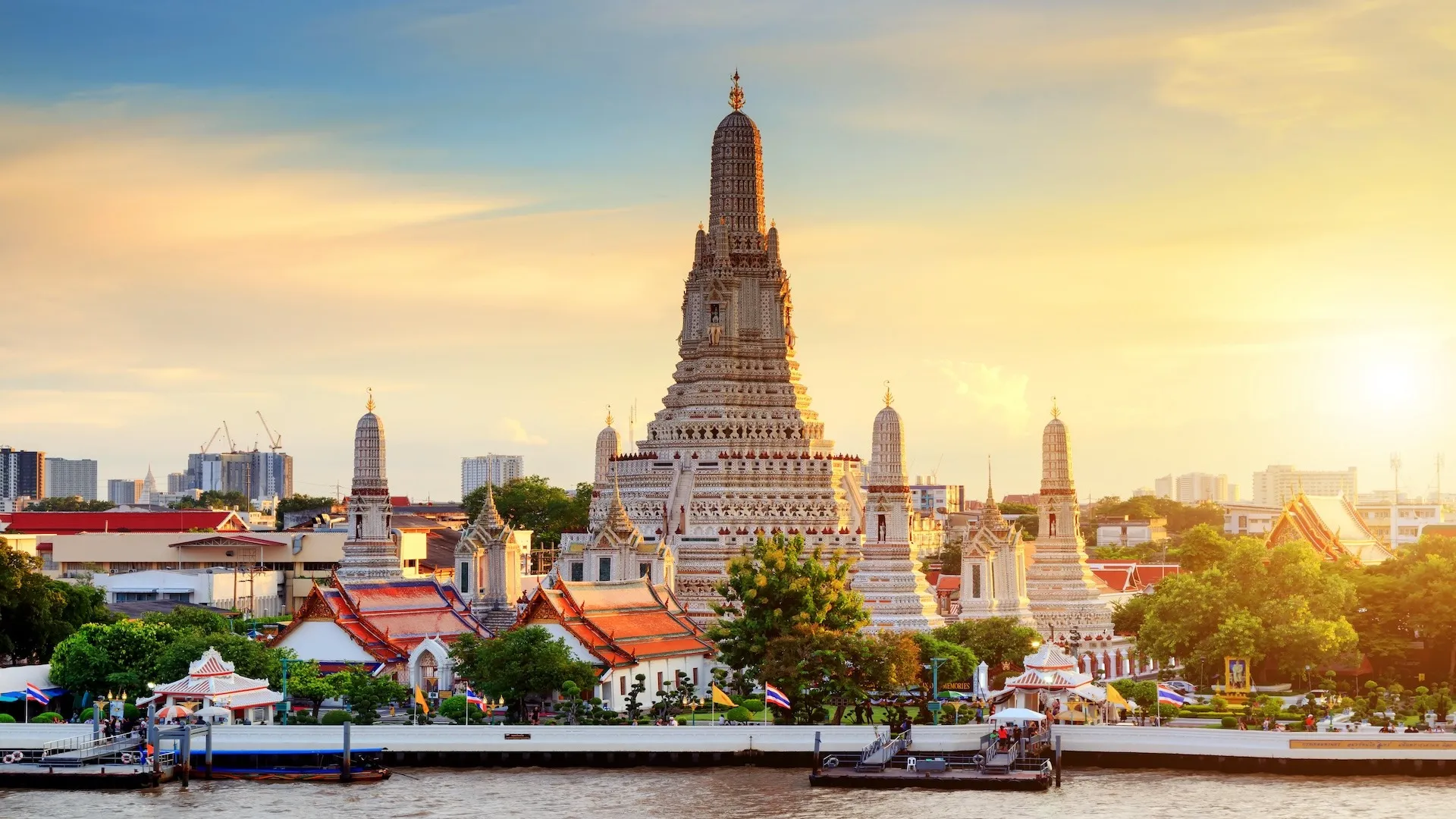
Famous 70-meter porcelain-encrusted spire located right across the river, reached via a 5 THB shuttle ferry from Tha Tien Pier.
2. Grand Palace & Wat Phra Kaew (500 m north)
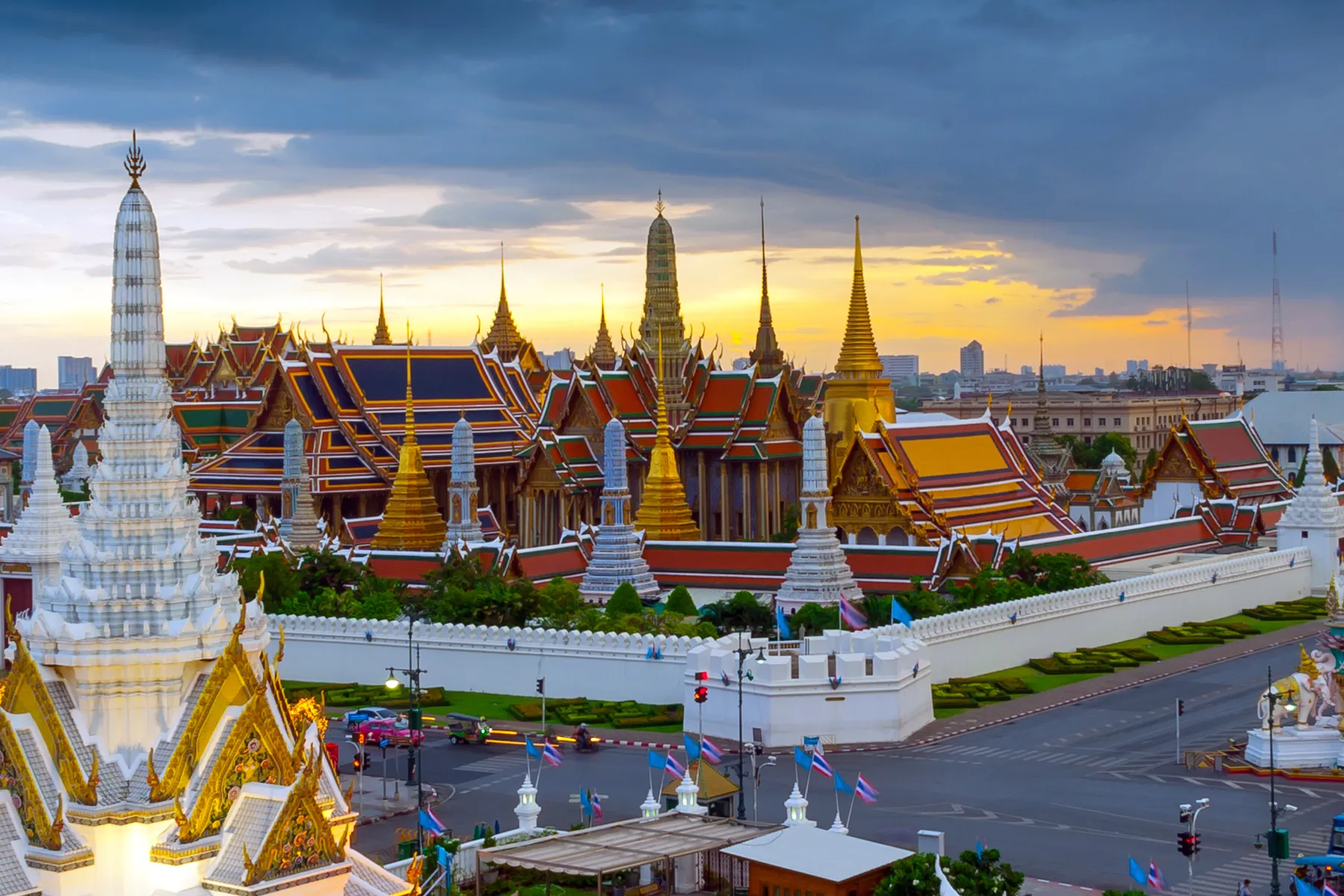
The former royal residence of the Kings of Siam and home to the sacred Emerald Buddha image.
3. Museum Siam (300 m south)
An interactive discovery museum exploring Thai history, identity, and culture located right next to MRT Sanam Chai.
Things to Do at Wat Pho
- Marvel at the Reclining Buddha: View the 46m gold Buddha and drop coins into the 108 alms bowls.
- Get an Authentic Traditional Thai Massage: Experience a relaxing body or foot massage at the official Wat Pho massage pavilion.
- Explore the Four Great Chedis: Stroll through ceramic-tiled stupas and marble-paved courtyards.
- Study Ancient Medical Inscriptions: Inspect stone murals depicting pressure points and traditional Thai medicine.
Local Food and Culinary Options
Tha Tien area right outside the temple gates is packed with charming riverside cafes and authentic street food.
Must-Try Culinary Options Nearby
- Tha Tien Riverside Cafes: Enjoy Pad Thai, Tom Yum Goong, and iced Thai tea at cafes overlooking Wat Arun across the river.
- Traditional Thai Massage & Tea Pavilions: Chilled herbal teas, coconut ice cream, and mango sticky rice sold along Sanam Chai Road.
Where to Stay: Accommodation Options
Visitors typically stay along Rattanakosin Island, the Chao Phraya River, or central Bangkok.
Heritage & Boutique Hotels ($35 – $200 USD / 1,200 – 7,000 THB per night)
- Sala Rattanakosin Bangkok / Riva Arun Bangkok / The Beemanor / Chetuphon Gate Hotel: Boutique heritage hotels located within 2 to 5 minutes walking distance of Wat Pho.
Budget Travel Guide & Admission Fees
- Admission Ticket: Entrance fee for foreign visitors is **300 THB per person** (includes complimentary drinking water). Thai citizens enter for free.
- Traditional Massage Pricing: Traditional Thai massage inside the temple costs approximately **300 to 500 THB** for 30–60 minutes.
- 108 Alms Coins: A bucket of 108 bronze coins for the chapel corridor costs **20 THB**.
Sample Half-Day Itinerary
- 08:00 AM: Arrive at **Wat Pho** via MRT Sanam Chai; view the **46m Reclining Buddha** and drop coins in 108 alms bowls.
- 09:15 AM: Stroll through the **Four Great Chedis** and the main **Ordination Hall**.
- 10:30 AM: Enjoy a 30-minute traditional Thai massage at the **Wat Pho Massage Pavilion**.
- 11:30 AM: Walk to **Tha Tien Pier** and catch the 5 THB shuttle ferry across the river to **Wat Arun**.
- 12:30 PM: Enjoy lunch at a Tha Tien riverside rooftop cafe overlooking the river.
Essential Rules and Visitor Guidelines
- Strict Modest Dress Code: Shoulders and knees must be covered. Sleeveless tops, short skirts, shorts, and tank tops are forbidden inside the chapel.
- Remove Shoes Inside Chapels: Shoes must be removed before entering the Reclining Buddha chapel and main Ubosot.
- Respect Sacred Images: Never climb on Buddha statues or sit higher than monks or Buddha images.
Frequently Asked Questions (FAQs)
1. Where is Wat Pho located?
It is located on Sanam Chai Road, Phra Nakhon District, Bangkok, right next to the Grand Palace.
2. What are the operating hours?
Open daily year-round from **08:00 AM to 07:30 PM**.
3. How much is the entrance fee?
Foreign adult admission is **300 THB** per person (free for Thai citizens).
4. What is the dress code?
Modest clothing is required—shoulders and knees must be covered.
5. How do you reach Wat Pho by MRT?
Take the MRT Blue Line to **Sanam Chai Station** (Exit 1) and walk 3 minutes.
6. How long is the Reclining Buddha?
The Reclining Buddha statue is **46 meters long and 15 meters high**.
7. Can you get a massage inside the temple?
Yes, Wat Pho houses the world-famous traditional Thai massage school where visitors can get massages.
8. What nearby attractions can be combined?
**Grand Palace / Wat Phra Kaew**, **Wat Arun** (across the river), and **Museum Siam**.
9. How long does a visit take?
A typical tour takes **1.5 to 2.5 hours** (longer if getting a massage).
10. What do the 108 bowls signify?
Dropping bronze coins into the 108 bowls symbolizes Buddhist merit-making and the 108 auspicious traits of Buddha.
Conclusion
Wat Pho stands out as Bangkok's ultimate spiritual and cultural landmark, where the 46-meter gold Reclining Buddha, 95 ceramic-tiled chedis, traditional Thai massage heritage, and royal Chakri dynasty history converge in Rattanakosin Island. From dropping coins into 108 alms bowls and admiring mother-of-pearl Buddha soles to experiencing an authentic Thai massage and exploring nearby temples, Wat Pho delivers an unmissable cultural journey. Dress modestly, take the MRT to Sanam Chai, and explore Wat Pho Bangkok!
Photo Gallery
What you'll experience
- 1
Seeing Reclining Buddha
- 2
Traditional Thai massage
- 3
Temple walking
- 4
Cultural learning
Nearby Destinations
These destinations are in close proximity to Wat Pho and can be visited on the same trip.
Visit Information
Opening Hours
Entry Fee
Best Time to Visit
November to February
Location
Bangkok, Thailand
Contact
For inquiries: N/A
Best Time to Visit
Recommended: November to February
Jan
32°/21°C
peakFeb
33°/22°C
highMar
35°/24°C
highApr
36°/25°C
moderateMay
34°/25°C
lowJun
33°/25°C
lowJul
33°/25°C
lowAug
33°/25°C
lowSep
32°/24°C
lowOct
32°/24°C
moderateNov
31°/23°C
highDec
31°/21°C
peakWat Pho - Frequently Asked Questions
More temples Spots & Nearby Attractions
Wat Arun
Bangkok, Thailand
Wat Phra Kaew
Bangkok, Thailand
Wat Saket (Golden Mount)
Bangkok, Thailand
Wat Benchamabophit
Bangkok, Thailand
Wat Rong Khun (White Temple)
Chiang Rai, Thailand
Wat Rong Suea Ten (Blue Temple)
Chiang Rai, Thailand
Dream World — Bangkok
Bangkok, Thailand
Safari World & Marine Park — Bangkok
Bangkok, Thailand
SEA LIFE Bangkok Ocean World — Bangkok
Bangkok, Thailand
Siam Amazing Park — Bangkok
Bangkok, Thailand
Snow Town Bangkok — Bangkok
Bangkok, Thailand
Fantasia Lagoon Water Park — Bangkok
Bangkok, Thailand
Discover More About Bangkok
Top Picks
Also Worth Reading
Plan Your Trip Around Wat Pho
Best Time to Visit Bangkok
Thailand Trip Ideas
Eat & Celebrate in Bangkok
Share this destination:
