 Translate
Sai Yok National Park
About Sai Yok National Park
Introduction: The Riverside Wilderness of Western Thailand
Situated along the Tenasserim Hills in Sai Yok District, approximately 100 kilometers northwest of Kanchanaburi town, Sai Yok National Park is one of Thailand's most scenic and historically rich protected areas. Established in 1980 as Thailand's 11th national park, this 500-square-kilometer reserve spans limestone mountain ranges, dense teak forests, sprawling caves, and the flowing waters of the Khwae Noi River (River Kwai).
Celebrated for its iconic riverfront waterfalls—where fresh forest streams cascade directly over limestone ledges into the Khwae Noi River—Sai Yok is equally famous as the habitat of the **Kitti's hog-nosed bat** (Bumblebee bat), the world's smallest mammal, and for preserving World War II historical sites along the historic Death Railway route.
Key Attractions & Natural Wonders
Sai Yok National Park offers a compelling mix of natural river landscapes, limestone caves, and historical heritage:
1. Sai Yok Yai & Sai Yok Noi Waterfalls
The park's most famous natural feature is **Sai Yok Yai Waterfall**, which pours directly off a forested cliff into the Khwae Noi River, best viewed from floating rafts or the park's suspension bridge. Further south along Highway 323 lies **Sai Yok Noi Waterfall** (Khao Pang), a popular road-accessible cascade surrounded by limestone ledges and food market stalls.
2. World's Smallest Mammal Habitat
The limestone caves of Sai Yok serve as the sanctuary for **Kitti's hog-nosed bat** (Craseonycteris thonglongyai). Weighing roughly 2 grams with a wingspan of just 15 centimeters, this tiny reddish-brown bat is endemic to this specific region of Western Thailand and neighboring Myanmar.
3. Limestone Caves (Tham Lawa & Tham Daowadung)
The park houses impressive cavern systems. **Lawa Cave (Tham Lawa)** is Kanchanaburi's largest cave, featuring large chambers filled with towering stalactites and stalagmites, reachable by boat along the Khwae Noi River. **Daowadung Cave** offers dramatic rock formations deeper in the jungle.
4. WWII Death Railway Heritage & Japanese Camp Ruins
The park preserves remnants of World War II history, including old Japanese army camp foundations, supply depots, and abandoned railway tracks where Allied Prisoners of War (POWs) cleared jungle paths for the Death Railway in 1943.
Key Highlights & Attraction Summary
- Direct-to-River Waterfalls: Sai Yok Yai cascading directly over cliffs into the Kwai Noi River.
- Kitti's Hog-Nosed Bat: Home to the world's smallest mammal living inside limestone caves.
- Lawa Cave (Tham Lawa): Massive multi-chambered cavern filled with stalactites and stalagmites.
- Floating Raft House Resorts: Iconic wooden floating resorts docked along the Kwai River.
How to Reach Sai Yok National Park
Sai Yok National Park is located along Highway 323, about 100 km northwest of Kanchanaburi town.
By Public Bus from Kanchanaburi
Frequent public buses and minivans depart from **Kanchanaburi Bus Terminal** heading toward Sangkhlaburi or Thong Pha Phum along Highway 323, dropping passengers off near the park entrance gate (approx. 1.5 to 2 hours, costing 80–120 THB).
By Train & Local Transport
Take the historic Death Railway train from Kanchanaburi to **Nam Tok Railway Station** (the current line terminus). From Nam Tok station, local songthaews or taxis reach Sai Yok Noi (2 km away) or Sai Yok Yai Park Headquarters (35 km further north).
By Private Car / Scooter
Renting a car or motor scooter from Kanchanaburi town allows easy access along Highway 323 to explore waterfalls, caves, and nearby Hellfire Pass.
Best Time to Visit
Water flow and weather conditions vary across seasons in Western Thailand.
Best Season: Cool Dry Season (November to February)
Brings sunny weather, clear river water, and pleasant temperatures (20°C–30°C). Ideal for bamboo rafting, cave exploration, and hiking.
Monsoon / Green Season (June to October)
Heavy rainfall makes **Sai Yok Yai** and **Sai Yok Noi** waterfalls reach their highest, most dramatic volume, surrounded by lush green rainforest canopy.
Top Nearby Attractions
1. Hellfire Pass Memorial Complex (15 km south)
A sacred memorial site and walking trail through a 17-meter deep limestone rock cut excavated by hand by WWII POWs.
2. Erawan National Park (65 km east)
Thailand's famous seven-tiered emerald waterfall park featuring crystal-clear limestone swimming pools.
3. Hintok River Camp & Floating Resorts (10 km away)
Luxury glamping safari tents and floating wooden raft resorts set along the Kwai Noi River.
Things to Do at Sai Yok National Park
- Take a River Raft Cruise to Sai Yok Yai: Cruise along the Khwae Noi River on a wooden raft to view the waterfall flowing into the river.
- Explore Lawa Cave (Tham Lawa): Walk through massive underground chambers filled with stalactite columns.
- Stay on a Floating Bamboo Raft House: Sleep on the river in a traditional floating bungalow surrounded by rainforest cliffs.
- Walk the Suspension Bridge: Cross the park's scenic suspension bridge for elevated photos over the Kwai Noi River.
Local Food and Culinary Delights
Dining at Sai Yok features local Western Thai and jungle culinary specialties.
Must-Try Culinary Specialties
- Kanchanaburi Jungle Curry (Gaeng Pa): Fiery local curry made without coconut milk, filled with wild herbs and fresh river fish.
- Fried Kwai River Fish with Garlic: Fresh river fish fried crisp and served with chili-lime dipping sauce.
- Isan Som Tum & Kai Yang: Spicy papaya salad paired with charcoal-grilled chicken served at market stalls near Sai Yok Noi.
Where to Stay: Accommodation Options
Sai Yok is world-famous for eco-friendly floating raft resorts along the river.
Floating River Rafts & Eco-Resorts ($40 – $200 USD / 1,400 – 7,000 THB per night)
- The FloatHouse River Kwai / River Kwai Jungle Rafts / Hintok River Camp / Sai Yok View Resort: Premier floating resorts and luxury safari tents offering riverfront views, kayak rentals, and peaceful jungle surroundings.
National Park Cabins & Camping ($10 – $40 USD / 350 – 1,400 THB)
- Sai Yok Park Headquarters provides official riverbank campgrounds, tent rentals, and basic park cabins.
Budget Travel Guide for Sai Yok
- National Park Entry Fee: The foreign adult entrance fee is **300 THB** (200 THB for kids), plus **30 THB** for a car permit or **20 THB** for a scooter.
- Cheap Public Transit: Taking the local bus from Kanchanaburi Bus Terminal costs under **100 THB** ($3 USD) each way.
- Sai Yok Noi is Free: Sai Yok Noi Waterfall (located right off Highway 323 near Nam Tok station) is free to access outside the main national park boundary.
Sample 1-Day Itinerary
- 08:00 AM: Depart Kanchanaburi town via private car, local bus, or Death Railway train to Nam Tok.
- 09:30 AM: Visit **Hellfire Pass Memorial Complex** to walk through Konyu Cutting and explore the WWII museum.
- 11:30 AM: Arrive at **Sai Yok National Park Headquarters**; walk across the suspension bridge to view **Sai Yok Yai Waterfall**.
- 01:00 PM: Enjoy a riverfront lunch of fried fish and jungle curry at a floating raft restaurant.
- 02:30 PM: Take a short longtail boat ride down the Khwae Noi River to explore **Lawa Cave (Tham Lawa)**.
- 04:30 PM: Stop at **Sai Yok Noi Waterfall** for fresh fruit snacks before returning to Kanchanaburi town.
Essential Rules and Visitor Guidelines
- River Safety Rules: Wear a life jacket when swimming in the Kwai Noi River or participating in floating raft excursions due to underwater currents.
- Protect Cave Systems: Do not touch stalactites, stalagmites, or disturb roosting bats inside Lawa and Daowadung caves.
- Insect Protection: Carry mosquito repellent and light long sleeves for evening raft dining along the river.
Frequently Asked Questions (FAQs)
1. Where is Sai Yok National Park located?
It is located in Sai Yok District, Kanchanaburi Province, Western Thailand, about 100 km northwest of Kanchanaburi town.
2. What is Sai Yok National Park famous for?
It is famous for Sai Yok Yai waterfall flowing directly into the Kwai Noi River, Lawa Cave, floating raft resorts, and being the habitat of the world's smallest mammal (Kitti's hog-nosed bat).
3. What is the world's smallest mammal found here?
The **Kitti's hog-nosed bat** (Bumblebee bat), weighing only 2 grams, lives inside limestone caves in the park.
4. How much is the national park entry fee?
The entrance fee is **300 THB for foreign adults** and 200 THB for children.
5. What is the difference between Sai Yok Yai and Sai Yok Noi?
Sai Yok Yai is inside the main park headquarters and cascades directly into the river. Sai Yok Noi is located 35 km south right off Highway 323 near Nam Tok train station.
6. How do you get to Sai Yok from Kanchanaburi?
Take a 1.5 to 2-hour local bus toward Sangkhlaburi, drive via Highway 323, or take the train to Nam Tok station.
7. What is Lawa Cave?
Lawa Cave (Tham Lawa) is Kanchanaburi's largest limestone cavern, featuring massive chambers with stalactite formations along the riverbank.
8. Can you stay on floating raft houses in Sai Yok?
Yes, floating wooden raft houses and luxury glamping resorts operate directly along the Khwae Noi River.
9. What local food should I try?
Kanchanaburi jungle curry (*Gaeng Pa*), fried Kwai River fish, and fresh papaya salad (*Som Tum*).
10. What is the best season to visit Sai Yok?
The cool dry season from **November to February** offers optimal comfortable weather, clear river water, and pleasant bamboo rafting conditions.
Conclusion
Sai Yok National Park stands out as one of Thailand's ultimate riverfront wildernesses, where waterfalls cascading directly into the Khwae Noi River, the world's smallest bumblebee bat, Lawa Cave stalactites, floating wooden raft resorts, and WWII Death Railway heritage converge in Kanchanaburi. From cruising on floating river rafts and exploring limestone caverns to honoring history at Hellfire Pass and tasting fresh river fish, Sai Yok delivers an unmissable nature adventure. Plan your trip, hop on a raft, and explore Sai Yok National Park!
Photo Gallery
What you'll experience
- 1
Waterfall swimming
- 2
Cave exploration
- 3
River rafting
- 4
WWII history viewing
Nearby Destinations
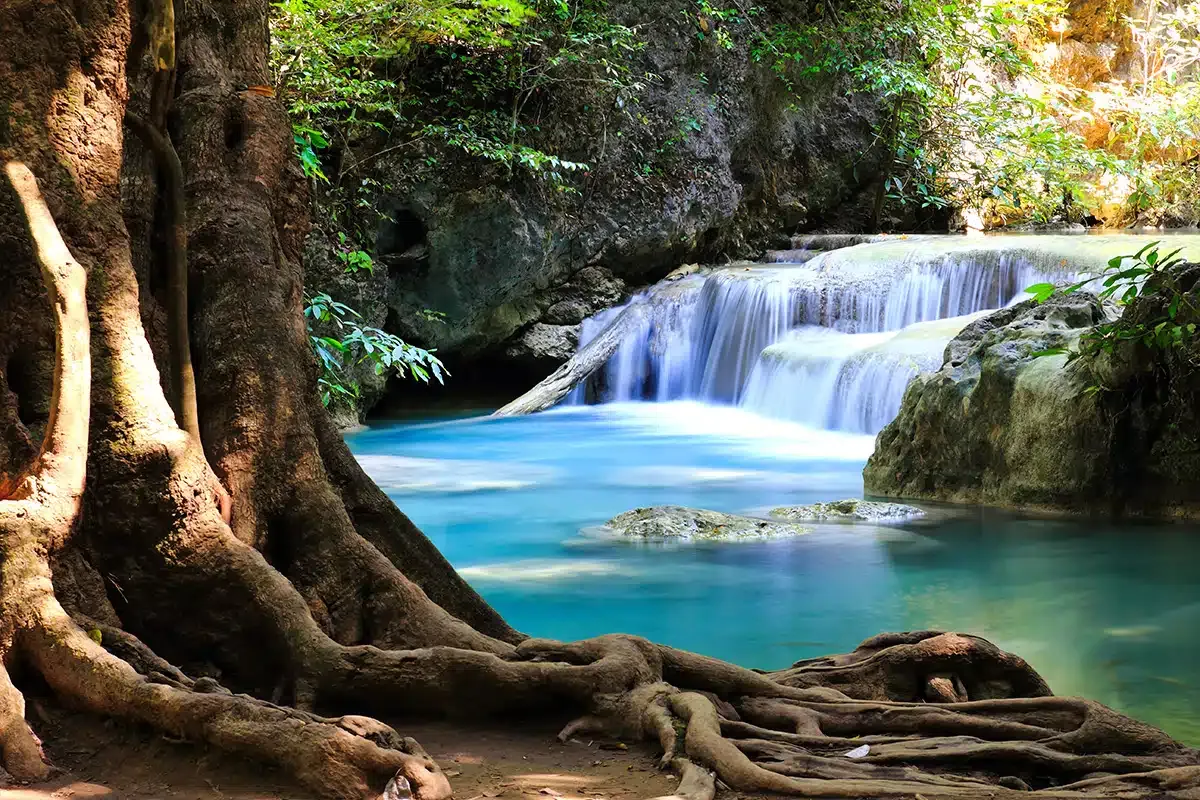
Erawan National Park
Khao Laem National Park

Hellfire Pass Memorial

Bridge on the River Kwai
These destinations are in close proximity to Sai Yok National Park and can be visited on the same trip.
Visit Information
Opening Hours
Entry Fee
Best Time to Visit
November to February
Location
Kanchanaburi, Thailand
Contact
For inquiries: N/A
Best Time to Visit
Recommended: November to February
Jan
32°/21°C
peakFeb
33°/22°C
highMar
35°/24°C
highApr
36°/25°C
moderateMay
34°/25°C
lowJun
33°/25°C
lowJul
33°/25°C
lowAug
33°/25°C
lowSep
32°/24°C
lowOct
32°/24°C
moderateNov
31°/23°C
highDec
31°/21°C
peakSai Yok National Park - Frequently Asked Questions
More wildlife Spots & Nearby Attractions
Elephant Nature Park
Chiang Mai, Thailand
Khao Yai National Park
Nakhon Ratchasima, Thailand
Erawan National Park
Kanchanaburi, Thailand
Doi Inthanon National Park
Chiang Mai, Thailand
Similan Islands
Phang Nga, Thailand
Khao Sok National Park
Surat Thani, Thailand
Hellfire Pass Memorial — Kanchanaburi
Kanchanaburi, Thailand
Bridge on the River Kwai — Kanchanaburi
Kanchanaburi, Thailand
Death Railway Museum — Kanchanaburi
Kanchanaburi, Thailand
Discover More About Kanchanaburi
Top Picks
Also Worth Reading
Plan Your Trip Around Sai Yok National Park
Best Time to Visit Kanchanaburi
Thailand Trip Ideas
Compare Sai Yok National Park & Read More
Share this destination:
